
NA
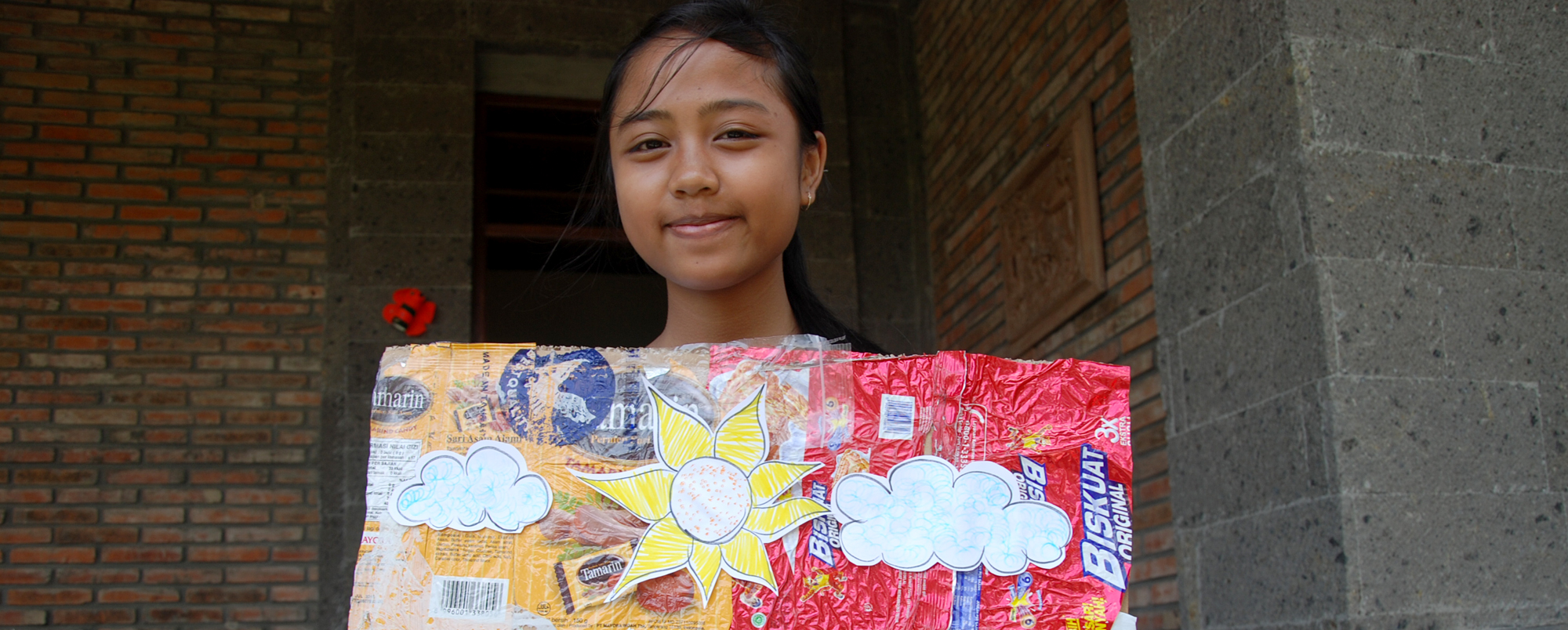
The mission of Bali Creative Reuse Center is to educate and bring awareness of environmentally safer ways to dispose of waste to the local and expat children of Bali, Indonesia. Our center is a resource to find information on recycling around Bali. BCRC encourages the reuse and reduce model by collaborating with local artists who can teach workshops on the values of reusing trash for functional and creative arts. The arts are a powerful medium to impact and inspire children. Creativity and creative thinking are critical tools to empower and initiate change in future generations.
We value children’s ideas by supporting projects in Bali such as Bye Bye Plastic and Underwater Rubbish Bags for divers designed by an 11 year old student.
Come into our location and check out the current work we are selling by local Indonesian artists who are using recycled materials. 70% of these proceeds go back to the artists! Currently, we are collaborating with about 5 local artists to use our center as a workshop space offering to both local and expat communities. Every month we collaborate with The Spring School just behind us to offer family and teacher workshops. These workshops are open to both local and expat communities.
These resources and the collaboration with local artists make it possible for us to bridge our work in the local communities. We are in the beginning process of developing community programs in the village of Bongkasa just outside Ubud. We support them in finding resources and educational programs for environmentally safer ways to dispose of waste. The next phase will be in implementing arts programs reusing some of this waste for arts with the children of this village. The more we put value and think creatively about how to reuse, repurpose, reduce, and recycle the more our children will think creatively about their future. This is not a local problem but a global one. We need to support the future education of all children based on the needs, demands, and environmental influences of their surroundings. In Bali, these are influenced by both local and expat communities so the social responsibility needs to be supported by both.
Share